Friday Night Science
Because you’re old enough to sign your own permission slip.
Friday Night Science is a quarterly, adults-only workshop series at WaterWorks where you can get hands-on with real science. No textbooks, no tests— just weird, wonderful, wild discovery.
Each session dives into a new topic— perfect for young professionals, science lovers, and anyone who’s ever said, “Why didn’t we do this in school?”
Upcoming Workshops
November 2026
Days
Hours
Minutes
Seconds
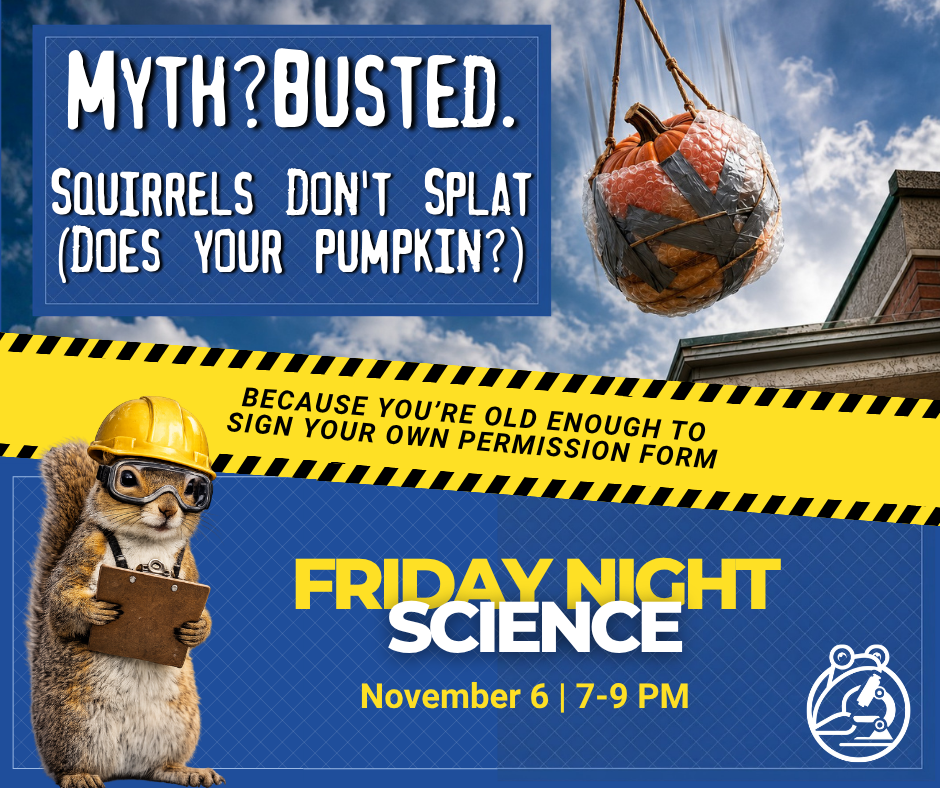
Myth?Busted:
Pumpkin Drop
At Pumpkin Drop, participants will investigate how squirrels survive falls from incredible heights, then put those adaptations to the test by engineering a pumpkin built to survive a fall of its own.
The program will begin with an introduction to the biology and physics behind a squirrel’s remarkable ability to fall and walk away. Participants will explore adaptations including their small body size, flexible bodies, ability to increase drag, and use of their tails for balance and control.
Then it’s time to test the myth. Using what they’ve learned, participants will design a way to help their pumpkin survive the drop. Build a protective structure around it, engineer a landing pad, create a system to slow its fall, or combine strategies. How you solve the problem is up to you.
Once the builds are complete, we’re heading outside and throwing pumpkins off the roof in the name of science. We’ll put each design to the test, examine the results, and find out which pumpkins survive and which ones go splat.
Archive
Take a look at our past Friday Night Science classes!
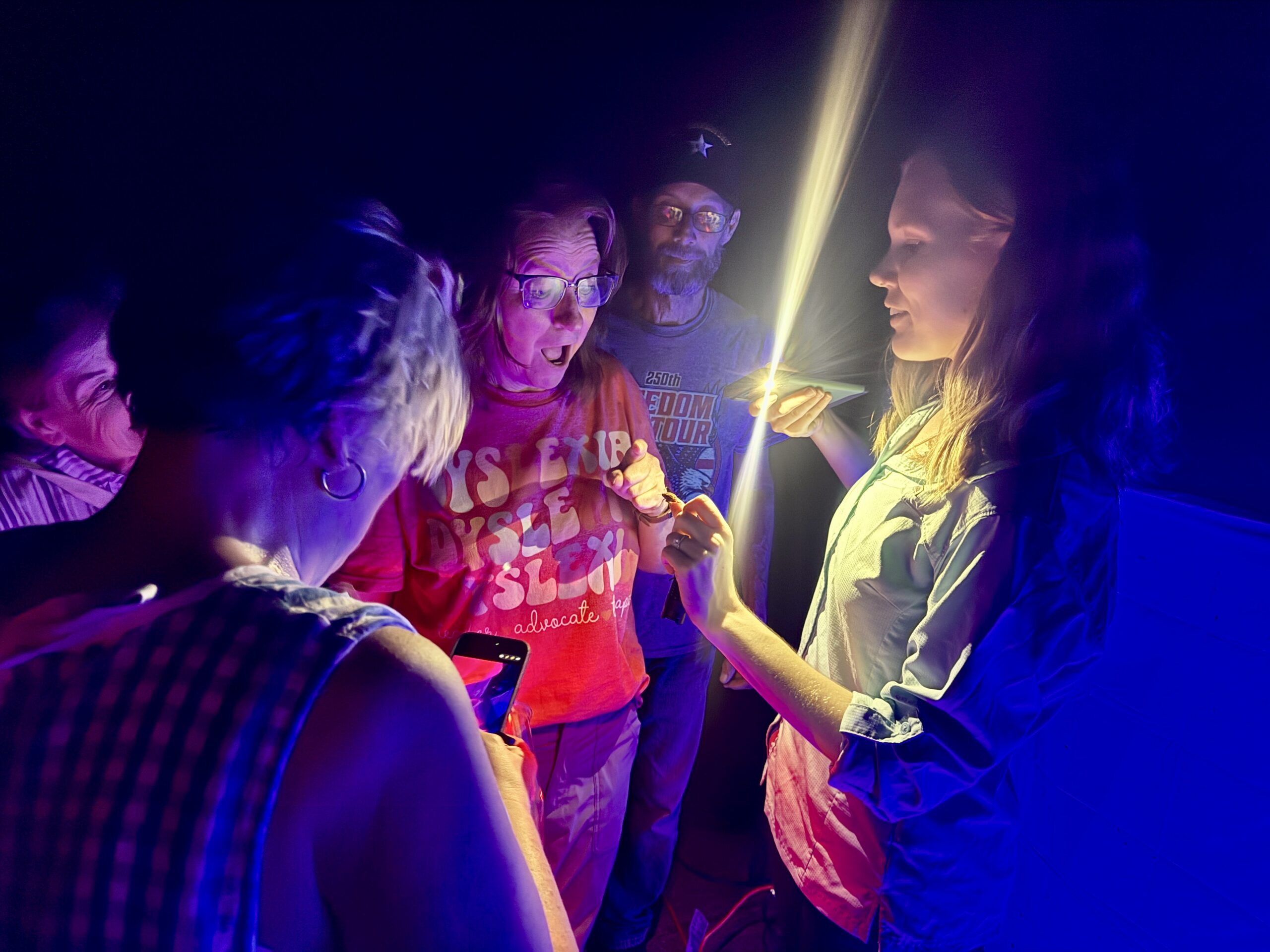
Participants learned about nocturnal insects and used blacklights to attract different specimens in the wetlands.
Participants learned about prescribed fire and participated in a wetland burn using drip torches and other forestry tools.
Participants learned how to relax, pin, and spread butterfly specimens using techniques similar to those used in museum collections, leaving with a beautifully prepared specimen.
This workshop explored the growing issue of microplastic pollution. Participants learned how scientists filter and examine water samples for microplastics and were encouraged to bring in their own water samples to test and analyze during the workshop.
A seasonal version of our insect pinning workshop featuring bat wing cicadas and sawtooth beetles. Participants practiced pinning specimens while celebrating Halloween with a costume contest and “bug snacks,” including edible crickets, cookies made with cricket flour, and gummy worms.
Participants explored the incredible diversity of beetles and learned basic specimen preparation techniques. The workshop introduced participants to beetle anatomy and the role beetles play in ecosystems while giving them a chance to examine and work with real specimens.